
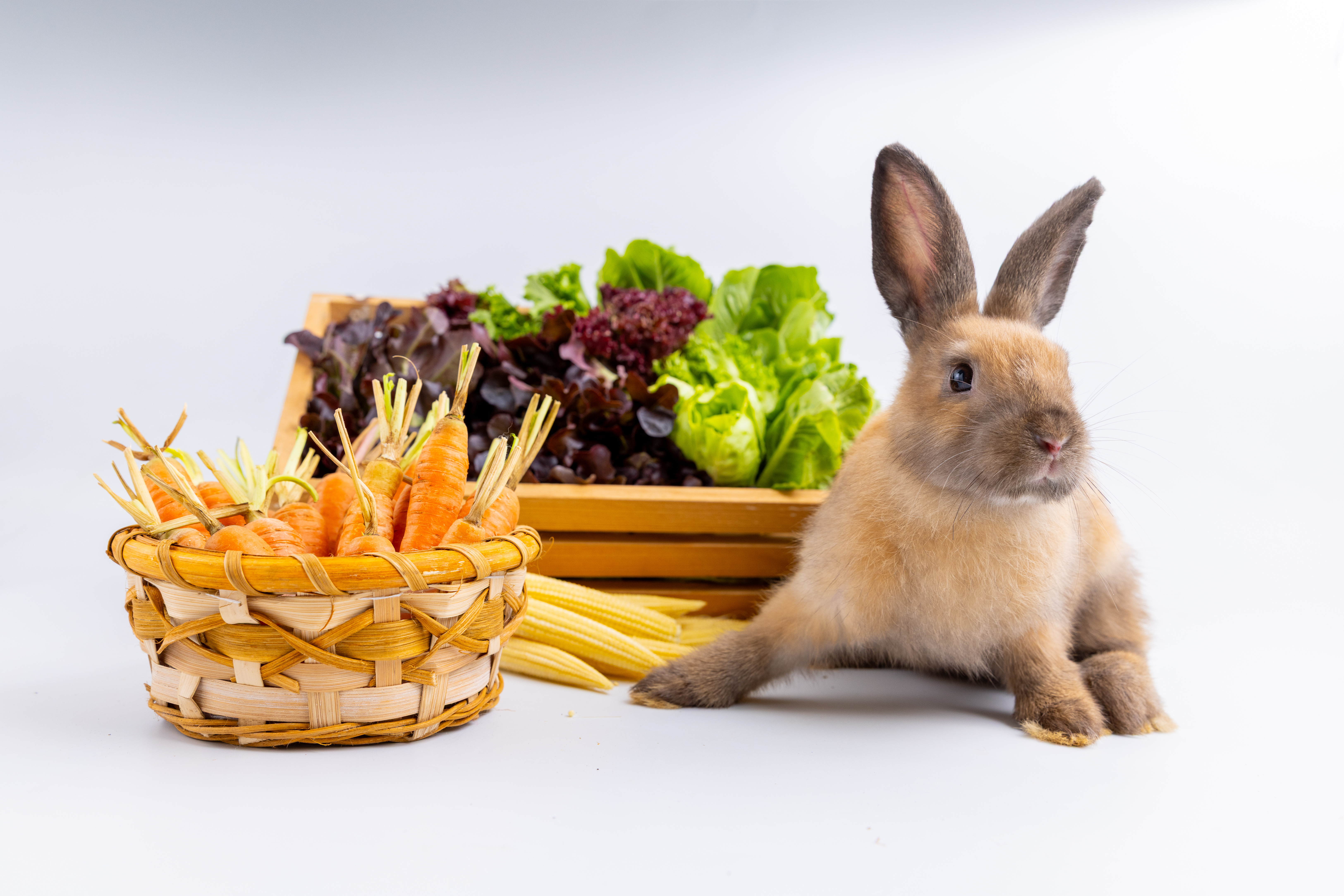
A rabbit’s diet should be made up of fresh leafy greens, good quality pellets, unlimited fresh hay (timothy, broe, oat hay, or orchard grass), and water in a flat bottomed ceramic bowl. Anything beyond that should be considered a “treat” and given in limited quantities. This includes carrots!
Here are a few rabbit-safe vegetables, with more to be found at The House Rabbit Society’s page:
- Kale, cilantro, dandelion greens (these are the most popular!)
- Dill, basil, mint, turnip greens, red/green/romaine lettuce (no iceberg lettuce), carrot tops, arugula, baby bok choy
Below is information regarding different diets bunnies require at different stages of their life:
Babies (Birth-7 months)
- Birth-3 weeks: Mother’s milk
- 3-7 weeks: Mother’s milk, alfalfa and pellets
- 7 weeks-7 months: Unlimited pellets, unlimited alfalfa hay
- 12 weeks: Introduce vegetables (one type at a time in quantities under 0.5oz)
Young Adults (7 months-1 year)
- Introduce timothy hay, grass hay, and oat hays; phase out alfalfa
- Decrease pellets to 1/2 cup per 6 lbs body weight
- Increase daily vegetables gradually
- Fruit should be rationed to no more than 1-2oz (2 tbsp) per 6 lbs of body weight
Mature Adults ( 1-5 years)
- Unlimited timothy, grass, or oat hay
- 1/4-1/2 cup pellets per 6 lbs body weight
- Minimum 2 cups fresh chopped vegetables per 6 lbs body weight
- Fruit daily ration no more than 2 oz (2 tbsp) per 6 lbs body weight
Seniors (Over 6 years)
- If sufficient weight is maintained, continue adult diet
- Frail, older rabbits may need unrestricted pellets to help them keep their weight up
- Alfalfa can be given to underweight senior rabbits, but only if calcium levels are normal
- Annual blood workups with a rabbit savvy vet are highly recommended for geriatric rabbits


